
Most architects know the baseline: storefront systems are lighter, more economical, and suited for single-floor spans. Curtain wall systems are engineered for greater spans, structural movement, and multi-floor applications. For many projects, those distinctions clearly fit one system or the other. For others, overlap may exist and the factors emerge only as design develops. That’s where surprises tend to surface.
This post covers the factors that most commonly change the decision, based on conditions we frequently encounter on plans and in the field.
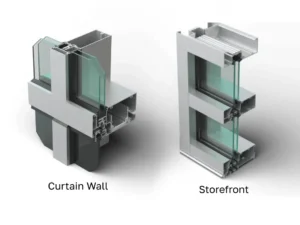
The Span Calculation: Why Door Openings Matter More Than Height
Most architects focus on building height, mullion spacing, and overall wind load when selecting a system. Those are the right starting points, but they can miss a critical variable: the widest unsupported span in the elevation, which is often a door opening, not a window bay.
A 6-foot pair of doors means the system must be engineered for that full opening, regardless of surrounding mullion spacing or building height. The door becomes a structural constraint that can drive system changes the rest of the elevation didn’t require.
Common thresholds we see on plans:
- 48” – 60” openings: Typically manageable within standard storefront systems
- 6-foot pair of doors: May require deeper mullions, reinforcement, or a system change
- Automatic doors: Openings of 10’-16’ often require substantial steel reinforcement or segmented framing to reduce unsupported spans
A project may meet design loads across the window bays with a 6” curtain wall system, while the door opening requires a 7-¼” system. That change can affect interior finishes and ceiling conditions designed around the smaller profile. Verifying the widest single span during SD/DD, including every door type, prevents the kind of redesign that costs real time and money in later phases.
Design Intent and Structural Reality
When aesthetic goals drive early design decisions – minimal framing sightlines, large uninterrupted glass surfaces, or SSG glazing – those goals often carry structural implications. Understanding that relationship early helps you achieve the visual result you’re after without mid-design engineering conflicts.
Narrower mullion profiles and larger glass surfaces increase structural demands on the system. Meeting those demands may require thicker glass makeups, additional steel reinforcement, or deeper framing, each of which has downstream effects on interior conditions and budget. The same applies to custom face caps and extended mullion profiles, which curtain wall accommodates without requiring fully custom extrusions. When customization is part of the design intent, that distinction matters for both cost and lead time.
Aesthetic intent and engineering feasibility are directly connected. Early coordination with your glazing contractor lets you pursue the visual goals within structural reality, rather than discovering the conflict during construction documents.
See how we’ve balanced aesthetic and engineering goals on past projects.
Glass Thickness, Specifications, and Weight Capacity
Glass selection directly affects system requirements. And it’s an area where projects frequently encounter late-stage conflicts.
Standard storefront and curtain wall systems are designed around 1” insulated glass units. When the project requires specialty glazing, the structural implications compound quickly. Laminated products for forced entry, ballistic, hurricane, or acoustic-rated applications can exceed both the glass pocket capacity and dead load limitations of standard systems. It’s not always the overall size or span that forces the issue.
A single-story bank may meet wind load and energy code requirements with standard storefront. But if the project requires 1-¼” laminated insulated glass for security performance, those units may exceed the allowable glass thickness for the specified pocket, requiring a system change. Conversely, a product like 1” glass-clad polycarbonate for bullet resistance may fit within the pocket, but its increased dead load still affects allowable spans and anchor requirements.
Confirming glass specifications early – before system selection is finalized – prevents the kind of late substitution that requires re-engineering the surrounding conditions. Our commercial glass services include early coordination with architect and engineering teams to verify specifications, identify potential conflicts, and ensure the final design aligns with structural and performance goals.
Building Codes Vary by Region: What to Verify Early
International Building Codes (IBC) provide a baseline, but local jurisdictions adopt and modify those requirements differently. Code requirements are regional, climate-specific, and tied to local environmental conditions. Applying specifications developed for one region to a project in another is one of the more common sources of late-stage conflicts.
Code and performance factors that commonly vary by jurisdiction and climate:
- Design wind speeds and exposure categories
- Structural deflection limits
- Building corner and edge-zone wind loads vs. center-of-building loads
- Solar orientation and glass performance requirements
- Thermal movement requirements
- Impact resistant glazing requirements for hurricane, missile, blast, ballistic, and forced entry applications
A glazing detail developed for a northern climate and copied to a Texas project won’t properly account for local energy codes, such as solar exposure, thermal expansion, or wind requirements. Specifications designed for coastal hurricane exposure may add unnecessary cost and structural demands on an inland project. Early coordination with the engineer of record to confirm the governing code year and applicable local amendments keeps these issues in the design phase, where they’re manageable.
The Decision Framework: Questions to Resolve in SD/DD
These questions belong in schematic and design development phases, not during construction documents:
- What’s the widest span? (including all door openings): Determines load requirements. Include automatic and revolving doors.
- What code governs? Which year of IBC? What jurisdiction? Are you adapting specs from elsewhere? Confirm with EOR early.
- What are your aesthetic goals? (minimal visible metal? clean sightlines? custom finishes?): Each affects system choice.
- What type of glazing best meets your goals? (standard insulated? laminated? impact-rated?): Glass weight directly affects load requirements.
- What wind criteria will govern the project? Basic Wind Speed, Design Wind Pressure, Allowable Stress Design (ASD), and Ultimate Wind Speed are related but not interchangeable. Confirm the project requirements early to avoid redesigns when glazing calculations are performed.
Asking these questions during SD/DD prevents costly redesigns during CD or construction.
How Southwest Glass Approaches These Decisions
The variables that change glazing installation and system selection – span calculations, glass weight, regional code requirements, aesthetic goals – are most manageable when they surface during design, not during construction. Early conversations with your commercial glazing contractor give you manufacturer-backed data and real-world field experience to make those decisions with confidence.
Our role is to help achieve design intent within structural and code constraints. When conflicts arise between specifications and field conditions, we work with the engineer of record and design team to find the right path forward. That kind of upfront coordination protects the design, keeps the schedule intact, and avoids the cost of mid-project changes.
These decisions matter most during SD/DD phases. Get in touch with Southwest Glass before system selection is finalized. A 30-minute conversation can prevent costly changes later.